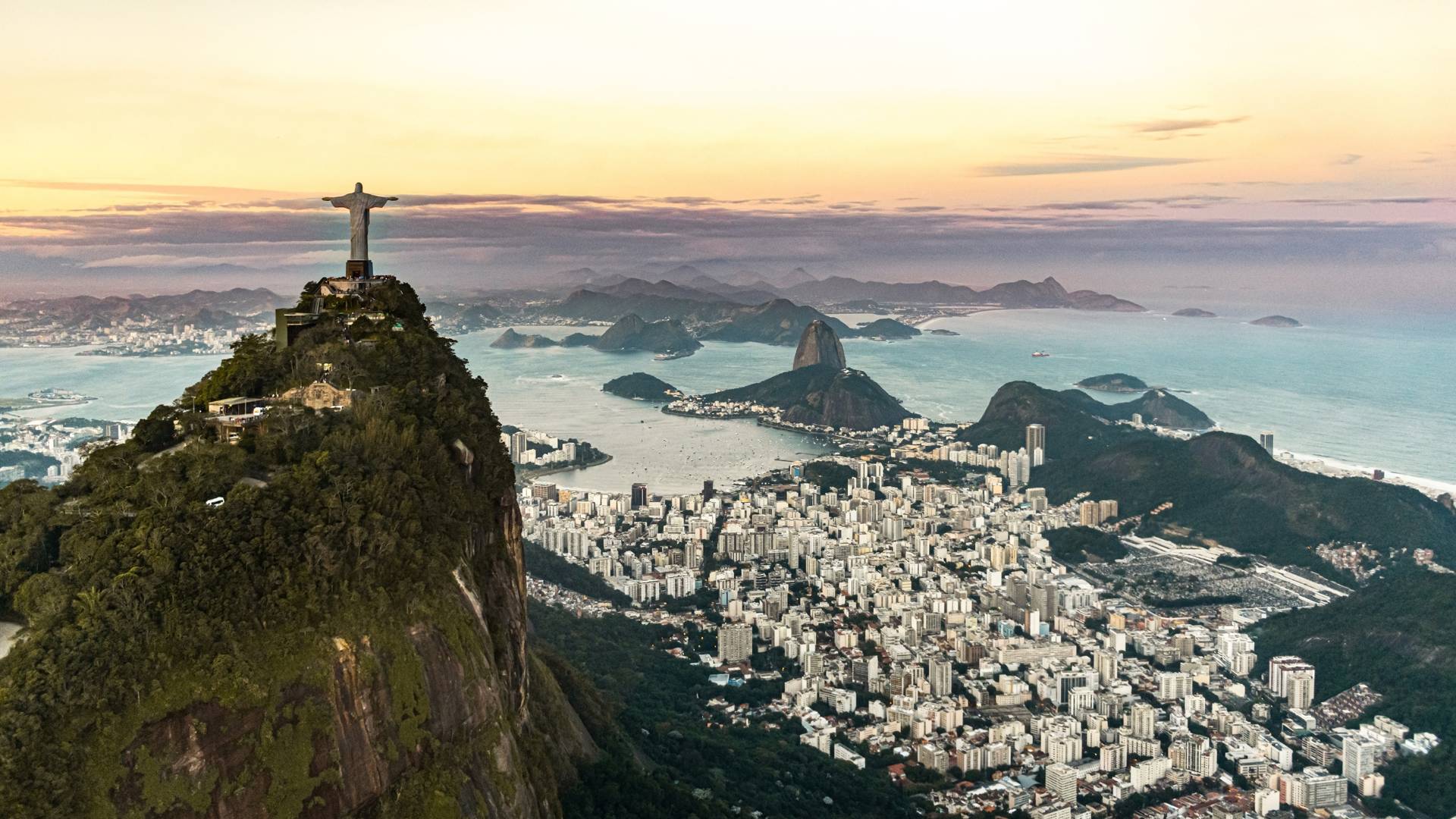
Knowing how to plan a trip to the 2027 Women’s World Cup starts with understanding Brazil’s scale, because travel between the host cities shapes every other choice. The tournament runs from June 24 to July 25, 2027, with 32 teams playing 64 matches across eight host cities, and it is the first Women’s World Cup ever held in South America. The tournament’s format and history are covered in our World Cup Ultimate Guide.
This 2027 Women’s World Cup travel guide works through the practical questions most travelers will encounter. We’ll discuss how to choose your cities, how to move between them, which entry rules apply, and how to pace a trip during the southern winter. We’ll also cover flight times for every host-city pair, July weather by city, and a dated planning timeline. When you’re ready to see how these choices come together, our 2027 Women’s World Cup packages show how a trip can be shaped around the cities and matches you prefer.
Key Takeaways
- The host cities sit nearly 2,000 miles (3,193 km) apart at their extremes, so most multi-city trips need domestic flights.
- U.S. and Canadian citizens need an e-visa for Brazil. Apply at least two months before your scheduled travel.
- June and July are winter in Brazil: warm in the Northeast, and cool in São Paulo and Porto Alegre.
- Rio de Janeiro hosts the opener and the final, while São Paulo hosts the most matches.
- Group matchups won’t be known until after the December 11, 2026 draw.
Why the Women’s World Cup in Brazil Is a Different Trip
 The Women’s World Cup in Brazil will be the first played in South America, and it begins and ends at the Maracanã, a national treasure that symbolizes Brazil’s deep-rooted love for soccer. The host nation plays the opening match there on June 24, and the final returns to the same ground on July 25. In between, it moves through a country where soccer is part of daily life, from beach games at dusk to corner bars that fill for every match.
We had the pleasure of experiencing Rio’s match-day atmosphere during both the 2014 World Cup and the 2016 Summer Games. Few countries can rival Brazil’s passion for soccer, and when you combine that with a culture that knows how to have a good time, the city comes alive with an electric, Carnival-like energy unlike anywhere else.
Travel logistics for this tournament are simpler than the 2026 World Cup, which spread across three countries, three currencies, and several time zones. The 2027 Women’s World Cup has one country, one currency, one time zone, and one set of entry rules. The challenge is distance: Porto Alegre, in the far south, and Fortaleza, on the northeast coast, are 1,984 miles apart in a straight line, a span that rivals cross-continent travel in the U.S.
1. Brazil’s Women’s World Cup Host Cities and Geography
What are the 2027 Women’s World Cup host cities?
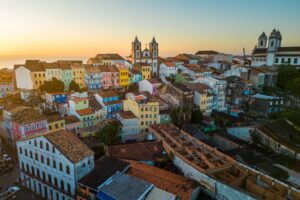 The 2027 Women’s World Cup host cities are Rio de Janeiro, São Paulo, Belo Horizonte, Brasília, Porto Alegre, Salvador, Recife, and Fortaleza. Every city hosts at least seven matches and at least one knockout match. São Paulo hosts the most, with 10, followed by Rio and Fortaleza with nine each.
| City | Stadium | Region | Rounds hosted |
|---|---|---|---|
| Rio de Janeiro | Maracanã | Southeast | Opener, group stage, quarter-final, semi-final, final |
| São Paulo | Arena Itaquera (Neo Química Arena) | Southeast | Group stage, round of 16, quarter-final, semi-final, bronze final |
| Belo Horizonte | Mineirão | Southeast | Group stage, round of 16, quarter-final |
| Fortaleza | Arena Castelão | Northeast | Group stage, two round of 16 matches, quarter-final |
| Brasília | Estádio Nacional (Mané Garrincha) | Center-West | Group stage, round of 16 |
| Salvador | Arena Fonte Nova | Northeast | Group stage, round of 16 |
| Recife | Arena de Pernambuco | Northeast | Group stage, round of 16 |
| Porto Alegre | Arena Beira-Rio | South | Group stage, round of 16 |
For stadium profiles and city overviews, see our 2027 Women’s World Cup venues guide.
How far apart are the host cities?
Porto Alegre and Fortaleza, the host cities that are farthest apart, are 1,984 miles from each other, with no nonstop flight between them. By road, Rio de Janeiro to Fortaleza takes about 39 hours; by air, it’s roughly three hours 10 minutes.
Flight time is only part of the picture. Add three to four hours for airport transfers, check-in, security, and boarding, and a one-hour hop from Rio to São Paulo becomes a four or five-hour journey.
One question worth asking early in your travel planning is whether you want a single-city trip, a regional trip within one cluster, or a coast-to-coast itinerary.
How long does it take to travel between host cities?
Flights between most host cities take one to three hours, and door-to-door journeys run four to eight hours once airport time and transfers are included. The quickest links are in the Southeast, where Rio, São Paulo, and Belo Horizonte are about an hour apart. Porto Alegre’s northern routes take longest.
The tables below cover all 28 host-city pairs, grouped by region.
How to read these tables:
- Air distance: straight-line distance between the main airports.
- Flight time: scheduled times, October 2026; ranges cover both directions.
- Nonstop: nonstop status as of October 2026. “Limited” means fewer than 20 flights a month. Airlines have not published mid-2027 schedules, so check again closer to travel.
- Door to door: estimates only, adding three to four hours to the flight for transfers, check-in, security, and arrival. Routes marked “Limited” or “Connection needed” include time for a connection.
Airports used: Rio GIG and SDU, São Paulo GRU and CGH, Belo Horizonte CNF, Brasília BSB, Fortaleza FOR, Porto Alegre POA, Recife REC, and Salvador SSA.
Southeast
| Route | Air distance | Flight time | Nonstop | Door to door |
|---|---|---|---|---|
| Rio de Janeiro to São Paulo | 210 mi | 1h 05m to 1h 15m | Yes | 4 to 5.5 h |
| Rio de Janeiro to Belo Horizonte | 224 mi | 1h 05m | Yes | 4 to 5.5 h |
| São Paulo to Belo Horizonte | 308 mi | 1h 05m to 1h 15m | Yes | 4 to 5.5 h |
Brasília Links
| Route | Air distance | Flight time | Nonstop | Door to door |
|---|---|---|---|---|
| Brasília to Belo Horizonte | 367 mi | 1h 20m | Yes | 4 to 5.5 h |
| Brasília to São Paulo | 529 mi | 1h 40m to 1h 45m | Yes | 4.5 to 6 h |
| Brasília to Rio de Janeiro | 566 mi | 1h 45m to 1h 50m | Yes | 4.5 to 6 h |
| Brasília to Salvador | 674 mi | 1h 55m | Yes | 4.5 to 6 h |
| Brasília to Porto Alegre | 994 mi | 2h 40m to 2h 45m | Yes | 5.5 to 7 h |
| Brasília to Recife | 1,027 mi | 2h 35m | Yes | 5.5 to 7 h |
| Brasília to Fortaleza | 1,048 mi | 2h 35m | Yes | 5.5 to 7 h |
Northeast Coast
| Route | Air distance | Flight time | Nonstop | Door to door |
|---|---|---|---|---|
| Recife to Fortaleza | 389 mi | 1h 15m to 1h 25m | Yes | 4 to 5.5 h |
| Recife to Salvador | 402 mi | 1h 25m to 1h 30m | Yes | 4 to 5.5 h |
| Salvador to Fortaleza | 628 mi | 1h 45m to 1h 50m | Yes | 4.5 to 6 h |
Porto Alegre Links
| Route | Air distance | Flight time | Nonstop | Door to door |
|---|---|---|---|---|
| Porto Alegre to São Paulo | 537 mi | 1h 45m to 1h 50m | Yes | 4.5 to 6 h |
| Porto Alegre to Rio de Janeiro | 696 mi | 1h 55m to 2h 15m | Yes | 4.5 to 6.5 h |
| Porto Alegre to Belo Horizonte | 844 mi | 2h 10m to 2h 15m | Yes | 5 to 6.5 h |
Southeast to Northeast
| Route | Air distance | Flight time | Nonstop | Door to door |
|---|---|---|---|---|
| Belo Horizonte to Salvador | 595 mi | 1h 45m | Yes | 4.5 to 6 h |
| Rio de Janeiro to Salvador | 754 mi | 2h to 2h 05m | Yes | 5 to 6.5 h |
| São Paulo to Salvador | 900 mi | 2h 20m to 2h 30m | Yes | 5 to 6.5 h |
| Belo Horizonte to Recife | 996 mi | 2h 30m | Yes | 5.5 to 6.5 h |
| Belo Horizonte to Fortaleza | 1,150 mi | 2h 45m to 2h 50m | Yes | 5.5 to 7 h |
| Rio de Janeiro to Recife | 1,151 mi | 2h 45m to 2h 55m | Yes | 5.5 to 7 h |
| São Paulo to Recife | 1,302 mi | 3h to 3h 25m | Yes | 6 to 7.5 h |
| Rio de Janeiro to Fortaleza | 1,346 mi | 3h 10m to 3h 20m | Yes | 6 to 7.5 h |
| São Paulo to Fortaleza | 1,452 mi | 3h 20m to 3h 45m | Yes | 6 to 8 h |
Longest Routes
| Route | Air distance | Flight time | Nonstop | Door to door |
|---|---|---|---|---|
| Porto Alegre to Salvador | 1,435 mi | 3h 15m to 3h 30m | Limited | 6 to 9.5 h |
| Porto Alegre to Recife | 1,836 mi | 4h to 4h 30m | Limited | 7 to 10.5 h |
| Porto Alegre to Fortaleza | 1,984 mi | 4h 15m flying time | Connection needed | 9 to 10.5 h |
Inside the Southeast, flying is generally faster than driving, although the time saved depends on the route and airport transfers. Bus journeys typically take longer. Everywhere else, flying is recommended. In October 2026, every host-city pair had regular nonstop flights except Porto Alegre’s routes to Salvador, Recife, and Fortaleza, which had limited nonstops or none. That makes Porto Alegre easiest to pair with São Paulo, Rio, or Brasília.
What is Brazil’s weather like in June and July?
 June and July are winter in Brazil, but conditions vary. The Northeast stays warm, with July highs of 79 to 88°F, while São Paulo and Porto Alegre turn cool, with lows of 50 to 54°F. Recife and Salvador are in their wet season.
The table below shows Brazil weather in July, the tournament’s busiest month, using averages from Weather and Climate. Brazil weather in June follows the same broad pattern, since both months fall in the southern winter.
| City | Average high / low | Notes |
|---|---|---|
| Fortaleza | 88 / 75°F | Warm |
| Brasília | 80 / 54°F | Dry season |
| Recife | 82 / 72°F | Wet season |
| Rio de Janeiro | 79 / 64°F | Mild |
| Salvador | 79 / 73°F | Wet season |
| Belo Horizonte | 75 / 55°F | Dry season |
| São Paulo | 73 / 54°F | Cool evenings |
| Porto Alegre | 68 / 50°F | About 16 rainy days |
Consider packing layers and even a jacket for evening matches, and check the weather forecast to see if rain gear may be necessary.
2. Choosing Your Travel Style
Where should you base yourself for the tournament?
 For most travelers, the choice comes down to Rio de Janeiro or São Paulo. Rio hosts the opener, a semi-final, and the final. São Paulo hosts the most matches, the other semi-final, and the bronze final. In October 2026, both had nonstop flights to every other host city.
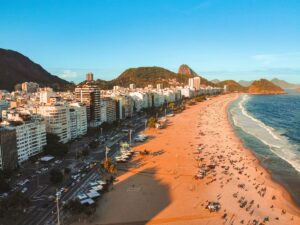
The better base depends on the trip you want. Rio suits travelers who want the tournament’s biggest occasions alongside beaches and an easy pace between matches. Ipanema and Copacabana are the classic places to stay, and the Fasano Rio overlooks Ipanema Beach.
São Paulo suits travelers who want more matches within reach and a city built around dining, art, and nightlife. The Jardins and Bela Vista districts are the usual bases, and the Rosewood São Paulo sits in Bela Vista. Arena Itaquera is in the city’s east zone, so allow generous time on matchdays. We recommend planning your transportation ahead of time, our pre-travel specialists can assist with suggestions.
Can you attend matches in several cities?
Yes, and it works best within a cluster. Rio de Janeiro, São Paulo, and Belo Horizonte form the most practical circuit, with nonstop flights of about an hour between each pair and road links for those who prefer to drive. The northeast coast forms a second cluster.
To plan a multi-city itinerary, start with the matches you most want to see, then group them by cluster. An open-jaw routing works well: fly into São Paulo, finish in Rio, and fly home from there. Two cities with comfortable buffers feel more rewarding than three on a tight timeline. Brasília bridges the Southeast and the Northeast, and Porto Alegre pairs best with São Paulo, Rio, or Brasília.
Should you follow one team or plan around a city?
 Planning around a city gives more certainty, while following a team depends on results that are months away. The USA, Canada, and Mexico qualify through the Concacaf W Championship, from November 27 to December 5, 2026, and the December 11 draw then sets the groups and group-stage venues.
Following your favorite team is exciting, but group-stage cities stay unknown until December, and knockout venues depend on where your team finishes. Planning around a city or a round, such as a Rio stay for the semi-final and final, lets you confirm hotels and flights now. Team-following suits those who can adjust plans at short notice. Travelers hoping to follow the U.S. women’s national team can see more details on the Follow USA page.
3. Brazil Entry Rules, Arrival, and Trip Length
Do U.S. and Canadian citizens need a visa for Brazil?
Yes. Since April 10, 2025, U.S. and Canadian citizens have needed a visa to enter Brazil, which is issued online as an e-visa. It allows stays of up to 90 days per entry, costs about USD $80.90, and should be requested at least two months before departure.
The Brazil visa for U.S. citizens and the Brazil visa for Canadians follow the same process. Apply through the Brazil e-visa portal, which allows up to 10 business days for processing and recommends applying two months ahead.
Your passport must be valid for the full duration of your stay, and have at least two blank pages. The yellow fever vaccine is recommended for U.S. and Canadian citizens, but it is not required for entry. The CDC recommends vaccination for most host cities but not for trips limited to Fortaleza and Recife. We recommend confirming current requirements with the US Department of State or Travel.gc.ca before you go.
Which airports serve each host city?
Each host city has one main airport, listed below with its code. Rio de Janeiro and São Paulo also have city airports, Santos Dumont (SDU) and Congonhas (CGH), which handle much of their domestic flying. Some São Paulo flights also use Campinas (VCP), but be aware that Campinas is a nearly two-hour drive from São Paulo.
| City | Main airport | Code | Secondary domestic airport |
|---|---|---|---|
| Rio de Janeiro | Rio de Janeiro/Galeão International | GIG | Santos Dumont (SDU) |
| São Paulo | São Paulo/Guarulhos International | GRU | Congonhas (CGH); Campinas Viracopos (VCP) |
| Belo Horizonte | Belo Horizonte/Confins International | CNF | N/A |
| Brasília | Brasília International | BSB | N/A |
| Fortaleza | Fortaleza International (Pinto Martins) | FOR | N/A |
| Porto Alegre | Porto Alegre International (Salgado Filho) | POA | N/A |
| Recife | Recife International (Guararapes) | REC | N/A |
| Salvador | Salvador International | SSA | N/A |
From North America, São Paulo Guarulhos (GRU) is the main gateway. According to current route listings, it had nonstop flights in October 2026 from cities including Miami, New York, Dallas, Toronto, and Montreal. Rio de Janeiro Galeão (GIG) had nonstops from Miami and New York. Airlines have not published mid-2027 schedules, so confirm routes when you book.
How early should you arrive, and how long should you stay?
 Arrive at least one full day before your first match, and plan one rest day for every two matchdays. Every host city runs on Brasília time (UTC-3), one hour ahead of New York and four ahead of Los Angeles in June and July, so jet lag is light.
Most flights from North America run overnight, which makes a full first day of rest worthwhile. A single-city trip with two matches fits comfortably into five to seven nights. A two-city trip with three matches needs eight to 10 nights to include rest days and travel. Travelers staying through the knockout rounds should plan for two weeks or more.
4. Women’s World Cup Planning Timeline
There are several milestones in the months leading up to the tournament that can shape your plans.
| Milestone | Date |
|---|---|
| European play-offs, round one | October 7 to 13, 2026 |
| Concacaf W Championship, Texas | November 27 to December 5, 2026 |
| Final draw, Museum of Modern Art (MAM), Rio de Janeiro | December 11, 2026 |
| Intercontinental play-off | February 2027 |
| Opening match, Maracanã | June 24, 2027 |
| Final, Maracanã | July 25, 2027 |
Domestic flights and hotels in Rio and São Paulo tend to fill up first, particularly around the opening match, the semi-finals, and the final. Waiting for the draw is a real trade-off. It tells you where your team plays in the group stage, but it also leaves less time to book in the cities that fill fastest.
A practical approach is to secure what you can confirm now, such as international flights and a base in Rio or São Paulo, and keep flexibility for legs that depend on the draw. Refundable or changeable fares are often worth the premium for those segments. For match dates by city, see the 2027 Women’s World Cup schedule.
5. Getting Around During the Women’s World Cup
How do you get to stadiums on matchdays?
 Four stadiums have a practical rail link: the Maracanã in Rio, Arena Itaquera in São Paulo, Arena Fonte Nova in Salvador, and Arena de Pernambuco near Recife, which pairs a metro station with a connecting bus. At the other four, rideshare, taxis, and private transfers are the usual options.
In Rio, Maracanã metro station sits beside the stadium, with São Cristóvão station nearby. In São Paulo, Corinthians-Itaquera station on Metro Line 3 and CPTM Line 11 serves Arena Itaquera directly. In Salvador, Campo da Pólvora metro station is about 650 yards (about a third of a mile) from Arena Fonte Nova. Arena de Pernambuco is in São Lourenço da Mata, west of central Recife; the nearest metro station, Cosme e Damião, connects to the stadium by bus.
Rideshare is widely available, though finding a car in the first hour after a match is slow. Walking a few blocks to a quieter pickup point helps, and a pre-arranged transfer removes the wait entirely. For those looking to plan ahead, our team can also arrange private match transfers.
What is the best way to travel between cities?
Fly. LATAM, GOL, and Azul operate Brazil’s domestic network, and nonstop flights link almost every pair of host cities. Between Rio de Janeiro, São Paulo, and Belo Horizonte, driving and intercity buses are realistic alternatives, though flying still saves one to two hours door to door.
The table below shows city center to city center times. The low end of each driving range assumes free-flowing traffic, and the high end reflects weekday-afternoon traffic. Bus times are scheduled journeys.
| Route | Road distance | Driving | Bus |
|---|---|---|---|
| Rio de Janeiro to São Paulo | 267 to 277 mi (BR-116, the Dutra) | 5.5 to 6.5 h | 6 to 7.5 h |
| Rio de Janeiro to Belo Horizonte | about 273 mi (BR-040) | 6 to 7 h | 7.5 to 8.5 h |
| São Paulo to Belo Horizonte | about 364 mi (BR-381, the Fernão Dias) | 7.5 to 8.5 h | 8 to 10 h, typically about 9 h |
The Dutra highway between Rio and São Paulo is slowest on Friday afternoons and holiday eves, and the Serra das Araras stretch is a known bottleneck.
Between Rio and São Paulo, the air shuttle from Santos Dumont (SDU) to Congonhas (CGH) is scheduled at 1 hour 5 minutes to 1 hour 10 minutes. Both airports sit inside their cities, so it is the quickest door-to-door link between the two largest host cities.
How much time should you leave between matches in different cities?
Leave at least one full day between matches in different cities whenever the flight is longer than two hours. Shorter hops inside the Southeast can work with less, but an evening match, a slow exit, and an early flight add up quickly.
Kickoff times have not been announced. Once they are, avoid any plan that depends on a same-day connection after a match.
6. Practical Tips for Traveling in Brazil
What travel habits make a Brazil trip easier?
 A few routine habits make a Brazil trip smoother. Use rideshare or a pre-arranged transfer after evening matches. Carry only what you need on matchdays. Keep a passport copy separate from the original, and leave the original at your hotel.
Set up a rideshare app before your first matchday, and save your hotel’s address in Portuguese to show drivers.
Do you need vaccines or travel insurance?
No vaccine is required to enter Brazil from the U.S. or Canada. The yellow fever vaccine is recommended, and comprehensive travel insurance with medical coverage is sensible for any long-haul trip. Roadtrips outlines its travel insurance options for guests who want coverage arranged alongside their trip.
Do you need to speak Portuguese?
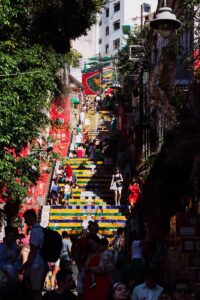 No. Portuguese is the language of Brazil, and English is less widely spoken than in many destinations, but translation apps cover most everyday needs. Staff at major hotels in the host cities commonly speak English, and a few Portuguese phrases go a long way with drivers, servers, and fellow fans.
Start with obrigado or obrigada (thank you), bom dia (good morning), por favor (please), and com licença (excuse me). Spanish is not the same as Portuguese, though many Brazilians will follow it.
7. World Cup Matchdays, Downtime, and Seeing Brazil
What are matchdays really like?
A Brazilian matchday is a full-day experience that starts long before kickoff. Fans gather in bars and streets around the stadium hours ahead, drums and songs build through the afternoon, and the slow exit afterward can add an hour or more to the evening.
The Maracanã sets the tone. The walk from the metro is part of the occasion, with vendors, flags, and supporters of both teams mixing outside. Inside, the sound rises and falls with every attack, and a goal brings a roar from every direction at once. When Brazil plays, especially at the opener on June 24, the whole city tunes in.
Matchdays are exhilarating and tiring. Leave your hotel well before kickoff, allow time for entry and finding your seat, and expect to return late after evening matches.
What else can you do between matches?
 Brazil offers more than enough to fill rest days. In Recife and Salvador, the Festas Juninas, Brazil’s June festivals, build toward São João on June 24 and overlap the opening days of the group stage. Iguaçu Falls, the Pantanal, and the Amazon are the add-ons travelers ask about most.
The Festas Juninas are among the Northeast’s biggest celebrations, with forró music, dancing, bonfires, and regional food filling public squares through June.
Iguaçu Falls, on the border with Argentina, is reached by a domestic flight to Foz do Iguaçu and fits well into two or three extra nights. The Amazon, usually reached through Manaus, suits travelers adding several days before or after the tournament. In the host cities themselves, Rio’s Sugarloaf Mountain and Christ the Redeemer, São Paulo’s restaurants and museums, and Salvador’s historic Pelourinho district are all worthy excursions.
8. Planning Around the Knockout Rounds
What happens if your team keeps advancing?
Knockout venues and dates are fixed in advance, so contingencies can be planned early. The round of 16 runs July 10 to 13 across seven cities, the quarter-finals follow on July 16 and 17, and the semi-finals, bronze final, and final are split between São Paulo and Rio.
| Round | Dates | Host cities |
|---|---|---|
| Round of 16 | July 10 to 13 | Fortaleza (two matches), Recife, Belo Horizonte, São Paulo, Porto Alegre, Salvador, and Brasília |
| Quarter-finals | July 16 to 17 | Belo Horizonte, Rio de Janeiro, Fortaleza, and São Paulo |
| Semi-finals | July 20 and 21 | São Paulo (July 20) and Rio de Janeiro (July 21) |
| Bronze final | July 24 | São Paulo |
| Final | July 25 | Rio de Janeiro |
The bracket ties each group finish to a specific venue. For example, the Group A winner plays its round of 16 match in Fortaleza on July 10, while the Group A runner-up plays in Belo Horizonte on July 11. Once the draw places your team in a group, you can map both likely paths and hold flexible options for each.
For travelers focused on the closing rounds, the semi-finals and final page shows how a trip can be built around the last week.
Frequently Asked Questions
Where is the 2027 Women’s World Cup final?
The final is at the Maracanã in Rio de Janeiro on Sunday, July 25, 2027. The same stadium hosts the second semi-final on July 21, so a single stay in Rio can cover both matches without any domestic flights, leaving time for the city between them.
Is the 2027 Women’s World Cup the first in South America?
Yes. The 2027 Women’s World Cup in Brazil is the first Women’s World Cup held in South America and the 10th edition overall, following nine tournaments since 1991. Brazil was confirmed as host in May 2024, and this will be the last edition with 32 teams before expansion to 48 in 2031.
Can you combine the Women’s World Cup with a Rio and Iguaçu itinerary?
Yes. Foz do Iguaçu is a domestic flight from Rio de Janeiro or São Paulo, and two or three nights at the falls fit comfortably before the opener, between group matches, or in the quiet days before the semi-finals. Visiting before the knockout rounds keeps the final week free.
Is the Women’s World Cup a good trip for families?
 Yes, for many families. The tournament falls during the North American summer break, Rio’s winter weather is mild, and rest days can be spent at beaches, parks, and Sugarloaf Mountain. Families should allow extra time for stadium entry and exit, and plan fewer matches with more downtime.
Do you need to rent a car for the Women’s World Cup in Brazil?
No. Most visitors rely on rideshare, taxis, and private transfers within cities, with domestic flights between them. A car can suit a Southeast road trip, but city traffic, stadium parking, and driving after evening matches make transfers the easier choice for most travelers.
What currency does Brazil use, and are cards accepted?
Brazil’s official currency is the Brazilian real (R$, BRL). Visa and Mastercard are widely accepted at hotels, restaurants, and shops in host cities, but it’s worth carrying some cash for smaller vendors. Restaurants typically add an optional 10% service charge, which must be clearly shown on your bill; if you truly enjoyed the service, a cash tip for your server is well-appreciated, though not expected.
Planning a 2027 Women’s World Cup Trip That Fits How You Travel
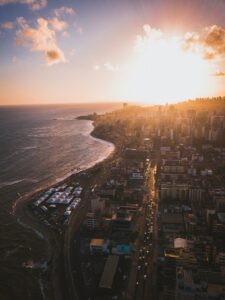 A well-planned Women’s World Cup trip comes down to three key decisions. Choose your cities first, ideally within one cluster, with Rio or São Paulo as a base. Set a pace that leaves a rest day for every two matchdays and a full day for any longer flight. Then time your bookings, securing what you can now while remaining flexible for what the December draw decides.
Brazil is familiar ground for Roadtrips. The team hosted guests at the 2014 World Cup and the 2016 Summer Games in Rio, most of our staff have spent extended time in Brazil, three are Brazilian, and our company’s president lived in Rio with his family for four months. We work with local contract staff who have worked these events before, and with suppliers we know well. Packages for 2027 are available now and fully customizable. Explore the 2027 Women’s World Cup packages or contact the team to start planning before the December 11 draw sets the groups.
Related reading:
- World Cup 2026 Travel Guide: How to Plan Your Trip
- World Cup Ultimate Guide
- The Biggest Soccer Tournaments in the World, Ranked