
Roughly five billion people followed the Paris 2024 Games in some form, representing 84% of the potential global audience. Beijing 2022 reached more than two billion unique viewers. And according to the International Olympic Committee, Paris 2024 sold 9.5 million tickets and clocked 28.7 billion hours of footage watched on broadcaster platforms, while posts about the Games across all social media drew an estimated 412 billion engagements.
Numbers that large raise an obvious question: what are the most popular sports at the Olympics? The honest answer is that no single, official worldwide ranking exists. The International Olympic Committee does not publish a sport-by-sport popularity table; instead, we see a scattered set of measurements like television audiences by country, streaming numbers, ticket sales, fan surveys, video views, and social engagement, each of which captures a different slice of interest.
In this article, we’re combining those disparate signals into one composite view, drawing on official audience and ticket data, representative surveys from YouGov and Nielsen, digital demand, and how widely each sport is played and watched around the world. Every statistic is labeled by the country or region it measures; where a sport’s global standing differs sharply from how closely North America follows it, we say so.
Key Takeaways
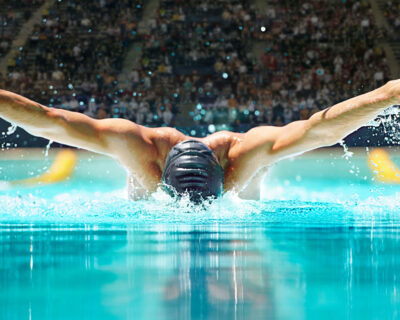
- Athletics, swimming, and artistic gymnastics have the strongest overall case for the most popular Summer sports.
- Figure skating and ice hockey lead Winter sports according to much of the available evidence.
- Swimming is the most consistently followed Olympic sport worldwide, in the top five of every market surveyed, while athletics leads in Europe and soccer leads across Latin America, Asia, and the Middle East.
- Paris 2024 reached around 5 billion people, compared with 2.01 billion unique viewers for Beijing 2022; however, these two figures use different definitions and are not directly comparable.
- Athletics sold more than one million tickets at Paris 2024, while basketball drew nearly 1.08 million spectators.
- Popularity varies by country; soccer and volleyball perform strongly in Latin America, while badminton is strong in several Asian markets.
- Ticket demand, television viewing, and digital interest can produce very different rankings.
Our Methodology: How We Ranked the Most Popular Olympic Sports
Our ranking combines:
- Official audience and ticket data, including broadcaster viewership, streaming numbers, and attendance figures
- Representative fan surveys measuring who says they follow or are interested in each sport, drawn from YouGov, Nielsen, and Seton Hall
- Digital demand, including official video views and social engagement
- Each sport’s reach within the Olympic program, including how many countries and medal events it involves
Followership percentages draw on two distinct YouGov instruments: the Global Fan Profiles survey of 13 markets, fielded in June 2024 and asking whether people watch or follow each sport, and a separate UK-only survey asking about interest, fielded during the Games itself. The two use different questions and aren’t directly comparable, so each figure in this article is labeled with its source. Nation and medal-event counts for each sport come from Olympedia’s Paris 2024 and Milano Cortina 2026 results pages.
No single signal outweighs the rest, and every figure is tied to the specific country, survey, or broadcast it came from. This is our own editorial ranking, built from the best publicly available data. It is not an official IOC ranking, since the IOC does not publish one.
The Most Popular Olympic Sports at a Glance
| Rank | Sport | Games | Main Popularity Signals | Leading Events |
| 1 | Athletics | Summer | Surveys, ticket sales, digital demand, global participation | Relays, 100m, marathon |
| 2 | Swimming | Summer | Multi-market surveys, extensive broadcast coverage | Freestyle and medley finals |
| 3 | Artistic gymnastics | Summer | Audience surveys, digital interest | Women’s all-around and team final |
| 4 | Soccer | Summer | Large global base, strong regional Olympic interest | Gold-medal matches |
| 5 | Basketball | Summer | Large Paris attendance, strong US TV | Men’s and women’s gold-medal games |
| 1 | Figure skating | Winter | Leading US surveys, strong event audiences | Men’s and women’s singles |
| 2 | Ice hockey | Winter | Major TV audiences, broad international interest | Gold-medal games |
What Is the Most Popular Olympic Sport?
 There is no worldwide number-one Olympic sport. Athletics has the strongest overall case based on its global participation, Olympic identity, ticket demand, and prominence of events like the 100-meter final. Swimming and artistic gymnastics also rank among the most popular sports across surveys and broadcast coverage.
More than one million athletics tickets were sold for Paris 2024, setting a new attendance record. In the UK, 52% of adults said they were very or somewhat interested in Olympic athletics, according to a UK-only YouGov survey fielded during the Games. The men’s 4x100m final highlight has drawn more than 13 million views on the official Olympics channel as of August 2026.
The 10 Most Popular Summer Olympic Sports
The 10 most popular Summer Olympic sports are athletics, swimming, artistic gymnastics, soccer, basketball, badminton, volleyball, tennis, table tennis, and diving. These are ranked based on the best publicly available ticket, survey, broadcast, and digital engagement data.
- Athletics
Athletics combines broad global participation with some of the Olympic program’s most prestigious finals.199 nations competed in athletics at Paris 2024, more than any other sport. Short, decisive races make it easy to follow, and stars such as Noah Lyles and Mondo Duplantis are recognizable even to viewers who don’t follow track and field the rest of the year. In Germany, the athletics evenings of August 4 and August 8 each drew around 8 million viewers, second only to the opening ceremony, and athletics ranks first in YouGov’s Global Fan Profiles survey in both Germany (25%) and France (27%), though it doesn’t reach the top five most-followed sports in the US or Canada.
Most popular events: 100m, relays, marathon. Strongest markets: Germany, France, the UK, Japan, and Kenya. Olympic reach: 199 nations, 48 medal events.
- Swimming
Swimming offers frequent finals and multiple medal chances for its biggest stars, keeping interest high across an entire Games. Swimming is the only sport that ranks in the top five across all eight Americas and Asia markets in YouGov’s Global Fan Profiles survey. It ranks first in both the US (23%) and Canada (24%), running from 24% in Brazil and China down to 11% in Indonesia. A separate UK-only YouGov interest survey put UK interest at 48%, with a gender split of 20% of women versus 13% of men very interested. In France, coverage of Leon Marchand’s fourth gold medal peaked at 15 million viewers, and Summer McIntosh’s 200m butterfly gold peaked at 1.93 million viewers on CBC in Canada. Stars such as Marchand and McIntosh give the sport new headline names each cycle.
Most popular events: Freestyle and medley finals. Strongest markets: UK, US, Canada. Olympic reach: 189 nations, 35 medal events.
- Artistic gymnastics
Difficulty, risk, and judging drama make artistic gymnastics one of the most discussed sports of any Summer Games. A UK-only YouGov interest survey put UK interest at 36%, while YouGov’s Global Fan Profiles survey found 20% of US adults, 20% of Brazilians, 18% of Canadians, and 15% of Argentinians following the sport, though it doesn’t reach the top five in China, India, Indonesia, or the UAE. In Brazil, Globo’s coverage of Rebeca Andrade’s medals and the team event reached 69.8 million people, and Ellie Black’s competition peaked at 1.4 million viewers on CBC in Canada. The US women’s team’s gold-medal day drew 34.7 million viewers on NBC, and Simone Biles remains the sport’s most recognizable name.
Most popular events: Women’s all-around and team final. Strongest markets: US, UK. Olympic reach: 50 nations, 14 medal events.
- Soccer (football)
Soccer is the world’s largest year-round sport, though that scale doesn’t automatically translate to Olympic prominence. Men’s teams are built from under-23 squads, with only three over-age players permitted, and soccer already has a packed year-round calendar of its own leagues and major soccer tournaments, so the Olympics doesn’t carry the same weight for the sport that it does for others. Even so, followership reaches 37% in Brazil, 30% in Indonesia, 29% in Argentina, and 28% in the UAE, putting soccer in the top five in ten of the thirteen markets YouGov’s Global Fan Profiles survey covered, though not in the US or Canada. Soccer has 211 member associations worldwide, yet only 23 nations and two medal events competed at Paris 2024, against athletics’ 199 nations and 48 events. Canada’s women’s team drew a peak home audience of 3.4 million during Paris 2024.
Most popular events: Gold-medal matches. Strongest markets: Brazil, Argentina. Olympic reach: 23 nations, 2 medal events.
- Basketball
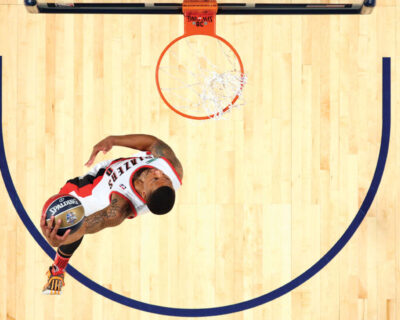 Basketball benefits from established global leagues and recognizable stars. Paris 2024 basketball drew nearly 1.08 million spectators, one of the Games’ largest attendance figures, and the USA-Serbia game averaged 10.9 million US viewers. Followership sits at 23% in China, 20% in the UAE, 14% in the US, and 13% in Indonesia on YouGov’s Global Fan Profiles survey, higher in China and the UAE than in the United States itself. Gold-medal games carry outsized weight for the sport’s popularity, since roster quality and star power concentrate there.
Most popular events: Men’s and women’s gold-medal games. Strongest markets: United States. Olympic reach: 15 nations, 2 medal events.
- Badminton
Badminton’s popularity concentrates in Asia but runs deep there: YouGov puts followership at 32% in Indonesia, 24% in China, and 21% in India. Badminton ranks first of all Olympic sports in both Indonesia and India, while barely registering in North America.
Most popular events: Singles finals. Strongest markets: Indonesia, China, India. Olympic reach: 49 nations, 5 medal events.
- Volleyball
Volleyball has a durable following in Brazil and other markets with strong domestic leagues. Followership reaches 27% in Brazil, 15% in Argentina, and 14% in Indonesia, with beach volleyball adding a further 24% in Brazil. Volleyball doesn’t reach the top five in the US or Canada.
Most popular events: Women’s and men’s gold-medal matches. Strongest markets: Brazil. Olympic reach: 17 nations, 2 medal events.
- Tennis
Tennis carries a built-in global fanbase from major tennis tournaments, including the Grand Slams, though the Olympic tournament competes with that same circuit for attention. Followership sits at 19% in India, 17% in the UAE, and 16% in Argentina, though tennis doesn’t reach the top five in the US or Canada. Familiar scoring makes it an easy entry point for existing tennis fans.
Most popular events: Singles finals. Strongest markets: India, broader global tennis-following markets. Olympic reach: 40 nations, 5 medal events.
- Table tennis
Table tennis is the most-followed Summer sport in China at 32%, the world’s largest single national viewership market. Table tennis also has 227 member associations, more than any other Olympic sport, ahead of volleyball, athletics, tennis, basketball, and soccer. That alone places it among the ten most popular Summer sports, despite limited English-language broadcast coverage. Its speed and simple scoring also make it strong in Japan and South Korea.
Most popular events: Men’s and women’s singles and team events. Strongest markets: China, Japan, South Korea. Olympic reach: 60 nations, 5 medal events.
- Diving
Diving is short, visual, and easy to judge on instinct. Diving is the fourth most-followed Olympic sport in both Canada (16%) and the US (15%) on YouGov’s Global Fan Profiles survey, ahead of basketball in both, and one of the few sports North America follows more closely than the rest of the world. UK interest shows a clear gender split of 20% of women versus 8% of men who say they’re very interested, and the format rewards viewers with quick, dramatic payoffs.
Most popular events: Individual and synchronised platform finals. Strongest markets: Canada, US, UK. Olympic reach: 32 nations, 8 medal events.
Also notable: Track cycling
A UK-only YouGov interest survey puts UK interest at 37%, and the sport tends to rank higher in countries coming off recent competitive success. Its short, explosive races and distinctive velodrome setting give it a strong visual identity.
Most popular events: Sprint and team pursuit finals. Strongest markets: UK and other cycling-strong nations. Olympic reach: 35 nations, 12 medal events.
Other Notable Summer Sports
A handful of sports fall just outside the top tier but carry real regional weight.
Combat sports (judo, wrestling, taekwondo, boxing): Popularity is concentrated rather than globally uniform; judo is closely followed in Japan and France, taekwondo carries deep roots in South Korea, and wrestling draws on its ancient-Olympic heritage.
Water polo: Limited year-round following in most markets, but a strong Olympic-discovery sport in Hungary, Croatia, Italy, and Serbia.
Handball: A major sport across continental Europe. Paris 2024 handball drew nearly 500,000 spectators, showing solid evidence of in-person demand.
Beach volleyball: Distinct from indoor volleyball, with nearly 450,000 Paris spectators and one of the Games’ most visually distinctive venues.
Rhythmic gymnastics: Third most-followed Olympic sport in the United States and fifth in Canada, yet it reaches the published top five in no other market YouGov surveyed.
Gymnastics vs Swimming
Swimming attracts broader interest across more countries, while gymnastics produces concentrated intensity around its marquee finals and stars. A YouGov US survey found swimming ahead of gymnastics there (23% versus 20%), and a separate YouGov UK survey found the same gap (48% versus 36%), though the comparison shifts by country and event.
Athletics vs Soccer at the Olympics
Soccer has the larger year-round fanbase, but athletics carries the stronger Olympic identity with broader participation, more medal events, and finals built specifically for the Games. Athletics sold more than one million Paris tickets and drew 52% UK interest, compared with soccer’s 37% followership in Brazil and 29% in Argentina.
Basketball vs Soccer at the Olympics
These sports are hard to compare directly, since their audiences depend on existing fan bases, roster strength, number of matches, and the weight placed on the gold-medal game. Basketball drew roughly 1.08 million Paris spectators and 10.9 million US viewers for USA-Serbia; soccer’s strength shows up in followership of 37% in Brazil and 29% in Argentina. Neither figure invalidates the other.
What Are the Most Popular Olympic Events?
The most popular Olympic events are:
- Men’s 100m final (athletics)
- Athletics relay finals
- Men’s swimming (Leon Marchand’s fourth gold)
- Women’s gymnastics all-around final
- Men’s soccer gold-medal match
- Men’s and women’s ice hockey gold-medal game
- Women’s figure skating free skate
- Women’s 1000m speed skating final
- Men’s luge
A sport, a discipline, and an event are not the same thing. Gymnastics is a sport; artistic gymnastics is a discipline within gymnastics; the women’s all-around is a specific event within that discipline. The distinction matters, because popularity data often applies at only one of these levels.
At the event level, the men’s 4x100m relay final highlight has drawn 13.1 million views and the men’s 100m final 6.8 million, as of August 2026. The men’s USA-Canada hockey final averaged 20.7 million US viewers, peaking at 26.0 million, while the women’s final averaged 5.3 million. The Netherlands’ broadcast of the women’s 1000m speed skating final averaged 3.96 million viewers, and Germany’s luge coverage peaked at 6.6 million. These figures span different countries and metric types, so none should be ranked directly against another.
Among standout Paris 2024 moments: NBC’s opening ceremony drew 28.6 million viewers, France Televisions’ reached 24.4 million (a French TV record), the Games’ single biggest US day peaked at 41.5 million on the strength of women’s gymnastics, and the BBC’s most-watched event was Keely Hodgkinson’s 800m final at 9.1 million.
Why Are Athletics, Swimming, and Gymnastics So Popular?
Athletics, swimming, and gymnastics share traits that translate well across borders: simple objectives, short and decisive events, frequent medal opportunities, and stars who feel new to a casual audience every four years. Athletics measures raw speed, strength, and endurance; swimming showcases fast, frequent races with clear winners; gymnastics adds difficulty, risk, and judging drama, with performance elements that reward personality as much as execution. That combination of accessibility and spectacle explains why all three routinely anchor prime-time broadcast schedules.
What Are the Most Popular Winter Olympic Sports?
Figure skating and ice hockey have the strongest overall case for top Winter sports. Figure skating leads several US surveys, while ice hockey produces some of the largest single-event audiences of the Winter Games. Alpine skiing, speed skating, snowboarding, and biathlon all draw very large audiences in countries with deep winter-sport traditions.
After figure skating and ice hockey, the order reflects regional weighting rather than a settled global consensus.
- Figure skating
 Figure skating consistently tops US intent-to-watch surveys. Ahead of Milano Cortina 2026, 38% of US adults and 59% of self-identified Olympic fans named it their most-anticipated sport. A 2021 YouGov survey found 40% of US Winter Games followers specifically followed figure skating. In Japan, the women’s free skate was the most-watched broadcast of the entire Games, drawing 13.65 million average viewers and reaching 19.7 million, according to Video Research.
Most popular events: Men’s and women’s singles. Strongest markets: Japan, United States. Olympic reach: 35 nations, 5 medal events.
- Ice hockey
Ice hockey delivers some of the largest gold-medal-game audiences of any Winter sport. The men’s USA-Canada final at Milano Cortina 2026 averaged nearly 21 million US viewers with a peak of 26 million, while the women’s final averaged 5.3 million. In Canada, the men’s gold-medal game drew 8.7 million viewers in overtime, with the women’s gold-medal game at 4.22 million. Seton Hall’s 2026 poll found 24% of US adults named ice hockey their most-anticipated sport.
Most popular events: Gold-medal games. Strongest markets: United States, Canada. Olympic reach: 13 nations, 2 medal events, the narrowest field of any Winter sport.
- Alpine skiing
Alpine skiing draws strong audiences in host nations and countries with established skiing cultures. Italy’s broadcast of the women’s downhill peaked at 4.9 million viewers as home favourite Sofia Goggia claimed the bronze medal.
Most popular events: Downhill, slalom finals. Strongest markets: Italy and other alpine nations. Olympic reach: 84 nations, 10 medal events, more than any other Winter sport.
- Speed skating
Speed skating shows how strongly national culture can shape event-level popularity: in the Netherlands, the women’s 1000m final averaged 3.96 million viewers. In the US, YouGov found roughly 30% of women and 35% of men among Winter Games followers said they followed the sport.
Most popular events: 1000m and 1500m finals. Strongest markets: Netherlands. Olympic reach: 23 nations, 14 medal events.
- Snowboarding
 Snowboarding appeals to a younger, more casual audience than many traditional winter sports. Seton Hall’s 2026 poll found 26% of US adults most eager to watch it, and Austria’s broadcast of the women’s Big Air final peaked at 914,000 viewers.
Most popular events: Big Air, halfpipe, slopestyle finals. Strongest markets: United States, Austria. Olympic reach: 27 nations, 11 medal events.
- Biathlon
Biathlon is one of the most popular Winter sports across continental Europe, even though it registers far less in English-speaking markets. Germany’s broadcast of the mixed relay peaked at 6.5 million viewers.
Most popular events: Mixed relay, individual finals. Strongest markets: Germany and continental Europe. Olympic reach: 29 nations, 11 medal events.
- Curling
Curling benefits from a strong “Olympic discovery” effect, drawing viewers who rarely follow the sport otherwise. Sweden’s mixed doubles final reached roughly 3 million viewers in total. Canada’s men’s gold-medal game drew 3.1 million viewers, the men’s final peaked at 5.5 million on the BBC, and Swiss coverage averaged 2.3 million. A 2021 YouGov survey found 20% of UK and 19% of US fans followed the sport.
Most popular events: Mixed doubles, men’s and women’s finals. Strongest markets: UK, US, Sweden. Olympic reach: 14 nations, 3 medal events.
- Ski jumping
Seton Hall’s 2026 poll found 25% of US adults most eager to watch ski jumping, with 33% of US Winter Games followers saying they followed the sport in 2021.
Most popular events: Individual and team large hill finals. Strongest markets: Germany, Austria, Norway, Poland, Slovenia, and Japan. Olympic reach: 22 nations, 6 medal events.
- Luge
Germany’s broadcast of the luge peaked at 6.6 million viewers, which is evidence of strong national popularity rather than proof of worldwide dominance.
Most popular events: Individual and team relay finals. Strongest markets: Germany. Olympic reach: 19 nations, 5 medal events.
- Bobsleigh and other sliding sports
 Seton Hall’s 2026 poll showed 22% of US adults most eager to watch bobsleigh, while 27% of US Winter Games followers said they followed it in 2021. No broadcaster has published an audience figure for bobsleigh in any market, so it ranks here on survey data alone.
Most popular events: Two-man and four-man bobsleigh finals. Strongest markets: United States. Olympic reach: 24 nations, 4 medal events.
In-person demand at Milano Cortina 2026 supports much of this ordering. Venue fill rates were highest of all for ski mountaineering’s Olympic debut, ahead of 95% for speed skating and short track, 93% for figure skating and ice hockey, 92% for biathlon, 91% for alpine skiing, and 90% for ski jumping, with roughly 1.3 million tickets sold overall, close to 88% of capacity.
Figure Skating vs Ice Hockey
Figure skating draws broader general interest in recent US surveys, while ice hockey produces larger audiences for specific high-stakes games such as a gold-medal final. Which sport “wins” depends on the country, the teams involved, and whether the measure is general interest or a single event’s audience.
Are the Summer or Winter Olympics More Popular?
The Summer Games attract the larger worldwide audience and include far more sports, athletes, and medal events. Roughly five billion people followed Paris 2024, while 2.6 billion people followed Milano Cortina 2026. These figures come from different Games years with different broadcast conditions; Winter interest concentrates far more heavily in countries with established winter-sport cultures. In Canada, 7 in 10 people, some 27 million, watched Paris 2024, while 30.5 million Canadians watched Milano Cortina 2026.
| Measure | Summer Olympics | Winter Olympics |
| Global audience benchmark | ~5 billion followed, Paris 2024 (reach) | 2.6 billion followed, Milano Cortina 2026 |
| Sports | 32 at Paris 2024 | 8 at Milano Cortina 2026 |
| Medal events | 329 at Paris 2024 | 116 at Milano Cortina 2026 |
| Athletes | ~10,500 at Paris 2024 | 2,880 at Milano Cortina 2026 |
| NBCU average audience | 30.6 million, Paris (Total Audience Delivery, led by NBC and Peacock) | 23.5 million, Milano (full cross-platform) |
| Geographic reach | Broad worldwide | Concentrated in winter-sport markets |
The 5 billion and 2.6 billion figures both use the same “followed” measure, making them more directly comparable than other figures in this article, though the two Games still took place under different broadcast conditions in different years. For a broader look at how the Games compare with other global events, see our guide to the most-watched sporting events in the world.
Which Women’s Olympic Events Are Most Popular?
The most popular Women’s Olympic events are:
- Women’s 800m final (athletics)
- Women’s gymnastics team gold-medal day
- Women’s ice hockey gold-medal game
- Women’s soccer
- Women’s swimming and athletics finals
- Women’s basketball gold-medal game
- Women’s volleyball
- Women’s figure skating
Paris 2024 was the first Games to reach full gender parity. Nielsen’s 2021 survey across 13 economies found 45% of women and 48% of men interested in the Olympics overall, and more than 70% of self-identified fans of badminton, gymnastics, swimming, table tennis, tennis and volleyball said they were specifically interested in the women’s competitions.
The event-level evidence backs this up. The women’s ice hockey final at Milano Cortina 2026 averaged 5.3 million US viewers. UK survey data shows women more interested than men in both swimming and diving. The BBC’s most-watched event of Paris 2024 was Keely Hodgkinson’s 800m final at 9.1 million viewers, Canada’s most-watched Paris moment was the women’s soccer team’s run at a 3.4 million peak, and the US women’s gymnastics team’s gold-medal day drew almost 35 million viewers on NBC. Women’s rugby sevens set a world attendance record for the sport, 66,000 at the Stade de France, beating the 58,498 at Twickenham in 2023.
Which Olympic Sports Are Growing Fastest?
The newest and fastest-growing Olympic sports are:
- Breaking, which debuted at Paris 2024
- Skateboarding, sport climbing, and surfing, all carried over to Paris 2024 from their Tokyo 2020 debut
- Baseball and softball, cricket, flag football, lacrosse, and squash, all approved for the LA28 program
- Ski mountaineering, which debuted at Milano Cortina 2026
A new Olympic sport is not the same as a sport with proven audience growth. Paris 2024 added breaking, skateboarding, sport climbing, and surfing to the program, though breaking was the only true debut, with the other three carried over from Tokyo 2020. The IOC has approved LA28’s proposal to add baseball and softball, cricket, flag football, lacrosse, and squash, and ski mountaineering made its debut at Milano Cortina 2026.
See the 2028 Summer Games schedule for when each sport takes place.
Do Ticket Sales Show Which Olympic Sports Are Most Popular?
Ticket sales reflect real in-person demand. However, venue capacity, number of sessions, prices, host-country interest, and the availability of finals all shape the numbers, so sales alone can’t set a definitive ranking. Paris 2024 sold 9.5 million tickets in total. Athletics led all individual sports with more than one million sold, basketball drew nearly 1.08 million spectators, rugby sevens saw more than 530,000 spectators, handball drew close to 500,000, and beach volleyball drew close to 450,000. A larger stadium naturally allows more total sales, while a smaller venue can sell out at a lower total.
Which Olympic Sports Are Best for New Viewers?
The best Olympic sports for new viewers are:
- 100m sprint
- Swimming freestyle finals and relays
- Basketball and volleyball
- Artistic gymnastics
- Track cycling sprints
- Alpine downhill
- Ice hockey
- Curling
Some sports are easier for newcomers to pick up than others. For instance, there’s no ambiguity about the winner of the 100m sprint. Swimming freestyle finals and relays reward viewers who just want fast, clean racing, while basketball and volleyball use scoring systems most viewers already understand. Track cycling sprints and alpine downhill both deliver quick, visual payoffs. Ice hockey moves fast enough to stay engaging for the uninitiated, and curling’s constant on-ice communication makes it more approachable than it first appears.
What Makes an Olympic Sport Popular?
Several patterns repeat across the sports covered here: broad global participation, simple formats a first-time viewer can follow, high-profile athletes, realistic national medal prospects, short and decisive finals, and visual spectacle. Prime broadcast scheduling matters as much as the sport itself, and sports offering multiple medal chances per star tend to sustain interest across an entire Games. Strong women’s competitions sit at the center of that appeal, and a sport’s ability to draw in viewers who don’t otherwise follow it year-round remains one of the clearest signs of genuine Olympic popularity.
Frequently Asked Questions
What is the most watched Olympic sport?
No consistent global sport-by-sport viewership ranking exists. Athletics, swimming, and artistic gymnastics have the strongest combined case among Summer sports, while figure skating and ice hockey lead according to the available Winter evidence.
What is the most watched summer Olympic sport?
No single broadcaster figure settles this question worldwide, but athletics and swimming both have strong claims. Athletics sold more than one million Paris 2024 tickets and drew 52% UK interest, while swimming led US and UK followership surveys. Artistic gymnastics anchored NBC’s biggest single day of Paris 2024, when full-day coverage across all events reached 41.5 million viewers in the United States.
What are the three most popular Summer Olympic sports?
Athletics, swimming, and artistic gymnastics, based on ticket demand, survey interest, broadcast reach, and digital engagement.
What are the most popular Winter Olympic sports?
Figure skating and ice hockey show most popularity according to the available evidence, with alpine skiing, speed skating, snowboarding, and biathlon drawing very large audiences in countries with strong winter-sport traditions.
Is gymnastics or swimming more popular at the Olympics?
Swimming attracts broader interest in recent US and UK survey data, while gymnastics generates intense, concentrated interest around its marquee finals and biggest stars.
What is the most popular athletics event at the Olympics?
The men’s and women’s 100m finals, due largely to their simplicity, prestige, global fields, and digital reach. On official video views, the 4x100m relays outperform the 100m, at 13.1 million against 6.8 million.
Which Olympic sports have the highest ticket demand?
Athletics sold more than one million tickets at Paris 2024, the largest sport-specific figure the IOC has reported.
What are the least popular Olympic sports?
There is no reliable universal ranking here. Breaking drew 12% interest in YouGov’s UK research, the lowest figure among the sports surveyed, though that doesn’t make it the world’s least popular sport overall.
Which Olympic sport has the most participating countries?
Athletics is among the broadest of any Olympic sport. Tokyo 2020 fielded 190 competing teams in the sport.
Every Olympic Fan Has a Different Favorite
Ask five different fans which Olympic sport matters most, and you can expect five different answers. Athletics boasts strong universal appeal carried by heavy ticket demand, its Olympic identity, and the sheer breadth of who competes. Swimming and gymnastics aren’t far behind, holding their own across surveys and broadcast numbers alike. On the Winter side, figure skating and ice hockey do most of the heavy lifting.
None of that settles things, though. Soccer owns the conversation in Brazil; badminton does the same across parts of Asia, and a handful of winter disciplines matter more in Oslo or Salzburg than they ever will on a US broadcast schedule. Host nations shift the numbers, and so do medal runs, time zones, and where a broadcaster happens to point its cameras.
One pattern holds no matter which sport tops your personal list: the sessions everyone wants to see are also the hardest to get into. And with the next Summer Games coming to Los Angeles in 2028, access to those sessions is going to get scarce sooner than later. If you’re ready to start planning your Olympic experience, explore Roadtrips’ 2028 Los Angeles Summer Games packages today.