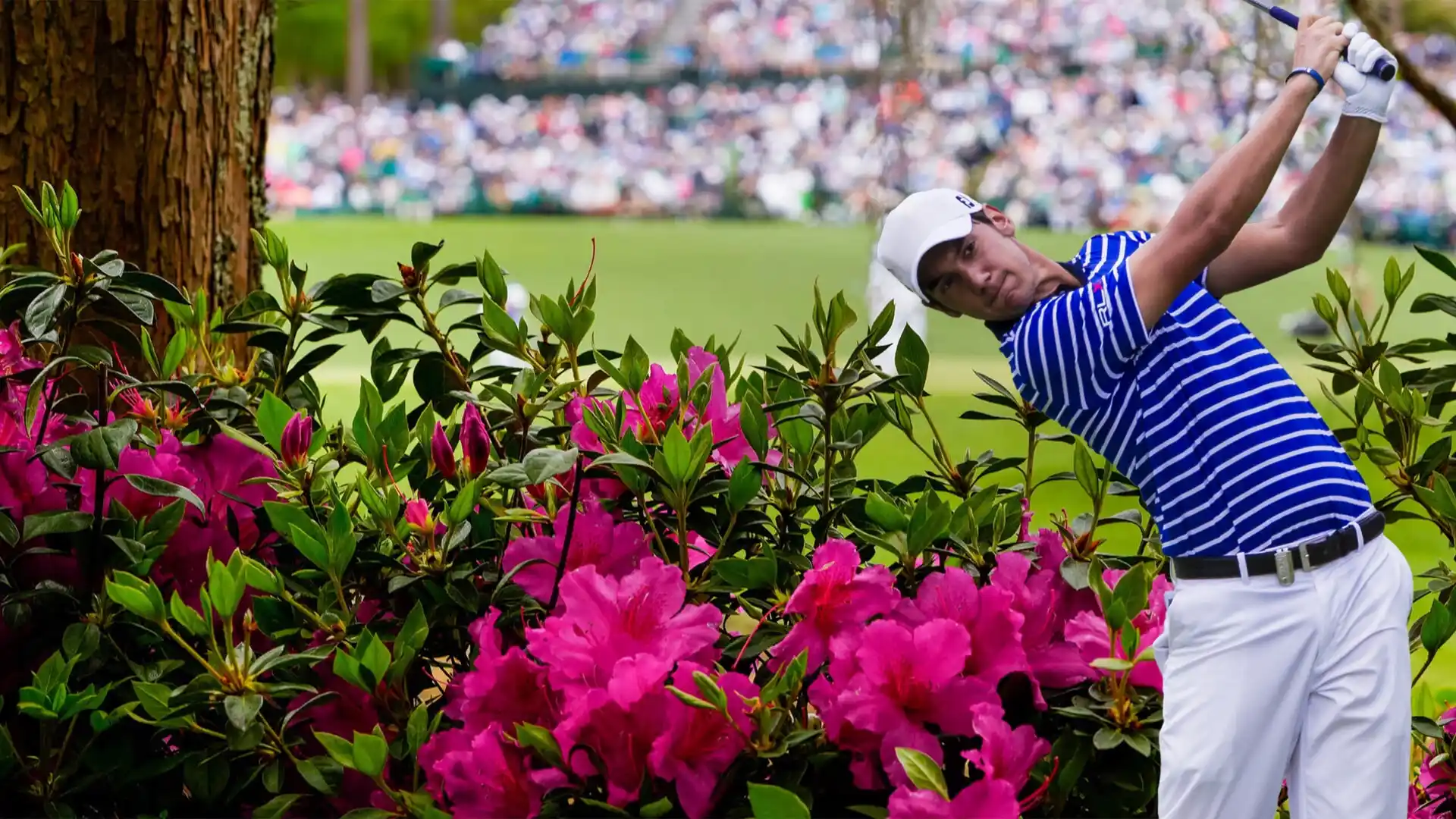
It’s a tradition like no other … and it’s also a physical and sensory endeavour that can push you to your limits. I’ve now hosted hundreds of guests coming to Augusta to take in the Masters, and one thing I’ve learned is that a good plan really helps take the experience over the top.
“Television doesn’t do it justice” is something you’ll hear a lot, and “television doesn’t do it justice” doesn’t do it justice. This is a very hilly golf course. The highest point of the course is the 10th tee box. From there, the course drops down to the lowest point: the 12th green, a difference in elevation that is larger than Niagara Falls at a net elevation of 175 feet.
The difference between a good day and an unforgettable one comes down to how well you understand the course layout, the flow between holes, and where to position yourself for the best views. The scale of the property, combined with its rolling terrain and strategic viewing zones, rewards those who plan ahead and move with intention. And that’s what this blog is here to help with!
You may very well be looking for a hole-by-hole description of the Augusta National golf course that helps you game-plan. I’m going to give you what you want, but I’m also going to give you what you need: real advice from an experienced Masters host.
 When you’re on the course, you will not see the flower-based names of golf holes. That’s really for the printed page and television. But they’re pretty, and people know them from television, so they’re included here. You don’t need to know them. You will see signs for Amen Corner, but otherwise, all you need to remember are the hole numbers.
I’ve talked with several patrons who have walked seven miles over the course of their day, and that’s hill-climbing miles! There is no right way to walk the course, but few people find the need to do it from beginning to end, 1 to 18. If you want to minimize your hill-climbing, go from south-to-north along the west side, where slopes tend to be a bit more mild, and then go downhill along the east side, from 10 to 11 and 12.
There are walking paths on the inside and outside of every hole, with the exception of Amen Corner. Crosswalks are clearly marked on maps, where ushers will let patrons through when the coast is clear. This helps get you around the course fairly quickly, if you need to save some steps.
It’s not uncommon on the tournament days for patrons to walk the course in reverse order: 18 to 1. This way, you avoid the larger galleries that crowd around leaders and star players, and you intercept each group as you walk. For me, it’s better to hang out for a while in key locations and see clusters of action. I will go chair-hopping as I go, sitting down in empty seats where they turn up — and I’ve never been tapped on the shoulder!
Summary Table of Each Hole
| Hole | Name | Par | Yardage | Elevation Change | Description |
| 1 | Tea Olive | 4 | 445 | ↑ ~30 ft | Tight opening hole with a demanding uphill approach and challenging green. |
| 2 | Pink Dogwood | 5 | 575 | ↓ ~20 ft | Classic risk-reward par 5 where long hitters can attack in two. |
| 3 | Flowering Peach | 4 | 350 | ↓ ~15 ft | Short downhill par 4 that tempts players to drive near the green. |
| 4 | Flowering Crab Apple | 3 | 240 | ↓ ~30 ft | Long par 3 with dramatic elevation change and difficult club selection. |
| 5 | Magnolia | 4 | 495 | ↑ ~40 ft | Brutal uphill par 4 featuring one of Augusta’s toughest greens. |
| 6 | Juniper | 3 | 180 | ↓ ~35 ft | Scenic downhill par 3 with severe green contours and famous Sunday pins. |
| 7 | Pampas | 4 | 450 | ↑ ~20 ft | Quietly difficult par 4 requiring precise iron play into a raised green. |
| 8 | Yellow Jasmine | 5 | 570 | ↓ ~75 ft | Dramatic downhill par 5 with exciting eagle opportunities. |
| 9 | Carolina Cherry | 4 | 460 | ↑ ~35 ft | Uphill finishing hole with a severely sloped putting surface. |
| 10 | Camellia | 4 | 495 | ↓ ~50 ft | Downhill tee shot into a sloping fairway and difficult green complex. |
| 11 | White Dogwood | 4 | 520 | ↓ then ↑ slightly | Demanding opener to Amen Corner with water guarding the green. |
| 12 | Golden Bell | 3 | 155 | ↓ ~10 ft | Iconic par 3 where swirling winds create constant Masters drama. |
| 13 | Azalea | 5 | 545 | ↓ ~35 ft | Famous risk-reward hole beside Rae’s Creek with eagle chances and danger. |
| 14 | Chinese Fir | 4 | 440 | ↑ ~15 ft | Bunkerless par 4 defended entirely by dramatic green contours. |
| 15 | Firethorn | 5 | 550 | ↓ then ↑ to green | Thrilling par 5 featuring a risky second shot over water. |
| 16 | Redbud | 3 | 170 | ↓ ~25 ft | Famous downhill par 3 known for Sunday pin locations and aces. |
| 17 | Nandina | 4 | 440 | ↑ ~25 ft | Pressure-packed uphill par 4 with a shallow, well-guarded green. |
| 18 | Holly | 4 | 465 | ↑ ~30 ft | Iconic finishing hole with a narrow fairway and uphill approach. |
Augusta National, Hole-by-Hole
Front Nine
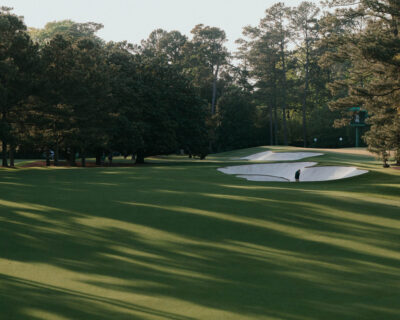
1. Tea Olive – Par 4 – 445 yards – ↑ ~30 ft
Narrow opener with an uphill approach that plays longer than the card. Players often choose less than driver to avoid the fairway bunkers, but that leaves a demanding mid-iron into a sloping green that can quickly punish a cautious start.
2. Pink Dogwood – Par 5 – 575 yards – ↓ ~20 ft overall
Downhill tee shot, then gently rising into a sloped green—classic risk-reward. Longer hitters can reach in two, but the green’s severe contours and deep bunkering create plenty of drama during the Masters, especially on Sunday afternoon.
3. Flowering Peach – Par 4 – 350 yards – ↓ ~15 ft
Short, downhill hole that tempts aggression off the tee. Many players consider driving the green, but Augusta’s tightly mown runoff areas and challenging green contours make precision far more important than simple power or distance.
4. Flowering Crab Apple – Par 3 – 240 yards – ↓ ~30 ft
Significant drop from tee to green makes club selection tricky on a long par 3. Wind swirls through the trees here, and the narrow green demands a perfectly struck long iron or hybrid to avoid disaster.
5. Magnolia – Par 4 – 495 yards – ↑ ~40 ft
Steep uphill climb into one of the course’s toughest putting surfaces. Recent length additions have turned this into a brutally difficult hole where even a par can feel like a major momentum swing during the tournament.
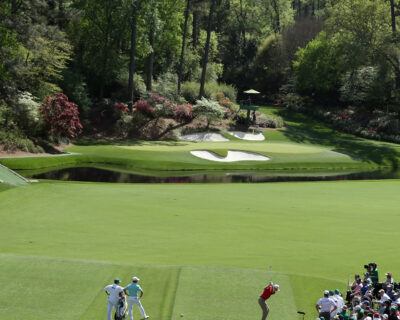
6. Juniper – Par 3 – 180 yards – ↓ ~35 ft
Elevated tee to a wildly contoured green that exaggerates misses. Fun to watch from above. Sunday hole locations near the lower bowl create dramatic back-to-front putts and some of Augusta National’s loudest roars.
7. Pampas – Par 4 – 450 yards – ↑ ~20 ft
Subtle rise to a perched green that rejects imprecise approaches. Though it lacks the fame of other Augusta holes, this demanding par 4 quietly tests distance control and rewards players who consistently find the proper angles.
8. Yellow Jasmine – Par 5 – 570 yards – ↓ ~75 ft
Dramatic downhill hole, especially on the blind second shot. Players often unleash towering approach shots toward a green hidden below, creating one of the course’s most visually stunning and exciting eagle opportunities during the Masters.
9. Carolina Cherry – Par 4 – 460 yards – ↑ ~35 ft
Uphill finisher with a green that tilts sharply back toward the fairway. Approach shots that land pin-high can still roll dramatically away, making distance control absolutely critical heading into the turn at Augusta National.
Back Nine
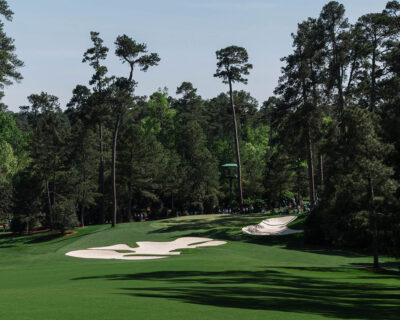
10. Camellia – Par 4 – 495 yards – ↓ ~50 ft
Plays downhill off the tee and into a green that falls away. You need to see the tee shots to get a sense of slope downward. The fairway cants sharply left, encouraging bold tee shots but severely punishing misses.
11. White Dogwood – Par 4 – 520 yards – ↓ ~10 ft then ↑ slightly
Mostly level but demanding, with a subtly elevated green over water. As the opening hole of Augusta’s famous Amen Corner, it consistently ranks among the toughest tests on the property during Masters week.
12. Golden Bell – Par 3 – 155 yards – ↓ ~10 ft
Small drop but swirling winds matter more than elevation. This green is very hard to hit and the water beckons. Club selection here has haunted contenders for decades, especially when Sunday pressure intensifies around Amen Corner.
13. Azalea – Par 5 – 545 yards – ↓ ~35 ft
Downhill sweep to Rae’s Creek before rising slightly to the green. Those who go for it on their second shots are often punished. The risk-reward drama here has produced countless eagles, collapses, and unforgettable Masters moments.
14. Chinese Fir – Par 4 – 440 yards – ↑ ~15 ft
Gradual rise to a bunkerless but severely contoured green. Without sand hazards for protection, Augusta relies entirely on green movement and precision iron play to challenge golfers on this deceptively difficult hole.
15. Firethorn – Par 5 – 550 yards – ↓ ~20 ft then ↑ to green
Downhill setup for a bold second shot over water to an elevated target. Roars echo across Augusta when players attack in two, but misjudged shots frequently spin back into the pond guarding the green.
16. Redbud – Par 3 – 170 yards – ↓ ~25 ft
Downhill tee shot feeding into one of the most famous Sunday pin positions – at the “bowl” on the front left corner. Will you see a hole-in-one? The sloping green funnels perfectly struck shots toward the cup and regularly creates unforgettable Masters highlights.
17. Nandina – Par 4 – 440 yards – ↑ ~25 ft
Uphill approach demands precision into a shallow green. Late on Sunday, nerves become a major factor here, especially with tightly positioned bunkers waiting to punish any slightly offline second shot under pressure.
18. Holly – Par 4 – 465 yards – ↑ ~30 ft
Iconic uphill finish with a demanding second under pressure. Very narrow fairway leads to shots into the trees or straight into the left fairway bunker. One final precise approach is required before golf’s most famous walk to the clubhouse.
How to Plan Each Day at The Masters
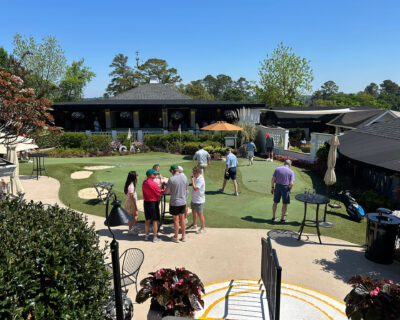 Tournament Week is seven days, and each day differs in terms of what will happen and how you want to approach being a spectator.
Monday and Tuesday are practice days. Players are relaxed. There’s a lot more activity at the practice facility and no rush to get on the course. Leaderboards will tell you when players have signed up to get a practice round in – but they may not play all 18. And there will be surprises! Players have been known to stop and chat. Cameras and autographs are the order of the day here. And the star of the show, as always, is the course.
Wednesday is special because of the Par Three Competition. Founders Circle photos end early, so it’s not the best day to get a free portrait at the end of Magnolia Lane. Patrons will place their chairs at the Par 3 Course, located northeast of the first tees.
Thursday’s ceremonial tee-off featuring greats from Masters past is a thrill that will require you to be among the first at the gates. The course opens a few minutes earlier to allow for patrons to get to the first tees. Typically the tee time for the ceremonial opening is at 7:25.
Friday’s groupings will be the same as Thursday’s, but in a different sequence – kind of reversed, but not entirely, so that there is star power for television coverage balanced throughout the day. Want to arrive a little later, see every player, walk the course with fewer crowds, and not worry too much about who’s leading? Friday.
Saturday is “moving day” and the reduced field goes out a bit later in the day, with leaders teeing off between 2pm and 3pm. But if you want to place a chair, you will want to show up before the gates open. The baller move here might be to arrive before dawn, put your chair where you’d like it, then leave the course for breakfast and take advantage of your one permitted re-entry.
Sunday’s final round creates iconic moments that you can say you witnessed first-hand. And that means 40,000 people will try to watch the winner’s final putt on 18, followed by the outdoor green jacket ceremony. It will be a long day and the crowds will get larger and larger. If there’s any time you want to have a seat up close for the action, it’s on the 18th green on Sunday.
The Best Viewing Spots at The Masters
1. Beside the tee box at 6
Closer is not always better at Augusta National. Standing right against the ropes can give you an excellent close-up view of one spot, such as the 6th tee box overlooking the green 30 feet below. But that close view can also limit how much of the course you can see.
Instead, seek higher ground. On the 6th, I love standing at the top of this little mound beneath a tree, just off to the left of the tee box. I can see above the heads of the patrons around the tee box, as well as the 6th green, 16th green, 15th green, and the tee box on 17. Try it!
2. On the side of the hill along 16
It’s one of the most popular spots, and that’s for a good reason. You can relax and watch all of 16, along with the shots over the water onto the 15th green. Almost as good as my secret spot above it beside the 6th tee box.
3. At the 12th tee
Unless you have binoculars, Amen Corner tends to be overrated. It’s iconic, but the action is further away. The 13th tee is way back, and the 12th green is quite a distance as well. It’s congested and can get dusty when the conditions are dry. Plus the sunlight is pretty direct. But if you can find a seat by the ropes behind the 12th tee, you’ll see the iconic high-pressure tee shots onto an almost unstickable green, the approaches and putts on 11, and a little bit of the tee shots on 13.
4. Watching approach shots at 9
If you can find the right position, you can see wedge shots and putts at the end of the 9th hole, then turn around and watch approaches and putts on 18. It tends to be crowded, especially on weekends, but it’s a great spot.
5. Where nobody sits between 4 and 5
There’s a grandstand at the back of the 4th green. But if you stand right beside the grandstand, you can watch putts on 4, then turn around and watch tee shots on 5!
6. The practice green and 1st tee box
Want to get close to the players? This high-traffic area gives you a great chance. You can get close enough to hear players interact with coaches and even get a sense of their mood. And then you can cheer them as they’re introduced and fire a tee shot that will fizz like no ball you’ve ever hit in your life.
7. Behind the 8th green
This is close to the top of the hill on the northwest corner, so keep it in mind for early in the day – you can find vantage points that will offer up tee shots on 2 and 9, putts on 8, and you’ll overhear reactions to putts on 1.
8. Between the 10th green, 14th green and 15th tee box
This is closer to Amen Corner but less crowded. Another reason not to walk the course in number order – why not go from 18 down to here and then Amen Corner, then up to 6 and then 3?
9. Under the trees along the 10th and 18th fairways
There’s a good chance someone is going to put a ball here. But if you want to see how players cope with the slope, this is the spot. And it’s shady!
10. The nexus of the 7th green, 3rd tee box and 8th tee box.
An unheralded spot in the centre of the course that some patrons won’t actually get to if they’re wandering the perimeter.
Final Thoughts
The “Tradition Like No Other” is a bucket-list experience every golf fan should experience – and many come back year after year to share the experience all over again. It really is that great. Not physically easy, but hopefully this guide will help you make a plan that turns a great time into an unforgettable one.
Want to prepare yourself even further? Combine this spectator guide with the general tournament logistics and tips already in our Masters Tips guide. Of course, your Roadtrips On-Site Hosts are also there to help. Book your Masters package today.